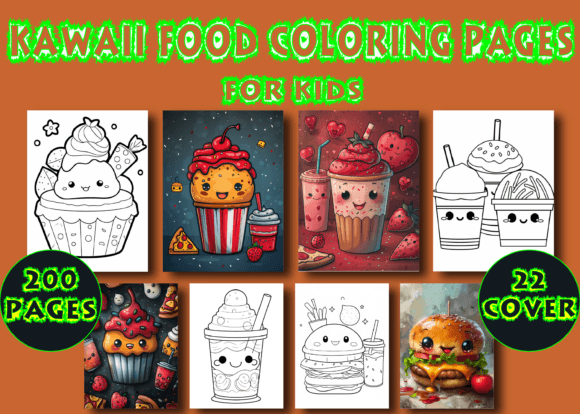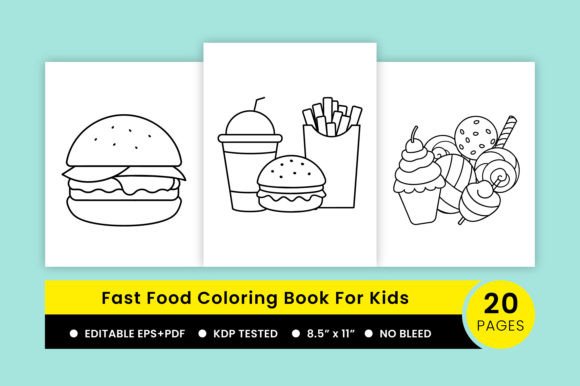
Fast Food Coloring Book Pages for Kids
Fast Food Coloring Book Pages for Kids isn’t just a collection of illustrations—it’s a practical, production-ready asset designed for creators who value precision, flexibility, and speed. Whether you’re launching a KDP coloring book, developing classroom resources, designing branded activity kits, or building digital learning tools, these pages offer more than visual appeal: they deliver strategic utility.
Why These Pages Matter Beyond Aesthetics
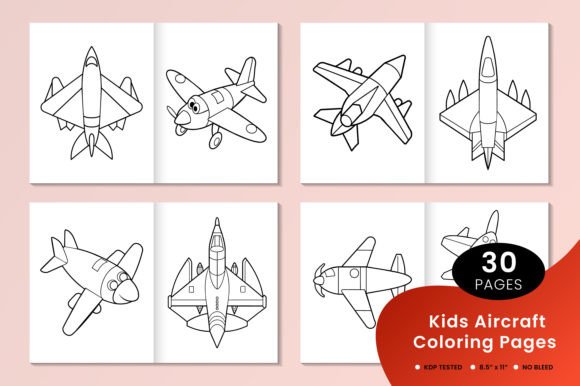
High-resolution, KDP-tested interior pages eliminate guesswork in publishing workflows. Each of the 20 individual PDF files is sized to 8.5 x 11 inches—standard for U.S. print—and includes no bleed, meaning margins are clean, safe, and aligned with Amazon’s requirements. That reduces rejection risk, avoids costly re-uploads, and accelerates time-to-market. For entrepreneurs and small publishers, that translates directly into fewer delays, lower revision costs, and faster revenue cycles.
The inclusion of an editable EPS file adds another layer of strategic control. Unlike static JPEGs or flattened PDFs, EPS allows for scalable vector editing—changing colors, adjusting line weights, isolating elements, or integrating logos and custom typography without quality loss. This matters if you’re tailoring content for specific audiences (e.g., adding nutritional labels for health educators or bilingual captions for ESL classrooms) or building a series with consistent visual branding.
When and How to Use Fast Food Coloring Book Pages for Kids Intentionally
Use these pages when your goal is clarity—not convenience. Randomly dropping them into a project without alignment to purpose dilutes their value. Consider these scenarios where intentional use creates measurable impact:
- Educators embedding food-themed activities into nutrition units—pairing coloring with discussion prompts about portion sizes, ingredient sourcing, or marketing tactics used by fast-food brands;
- Freelance designers delivering white-label activity books to clients in the kids’ wellness or edutainment space—customizing line art to reflect brand voice before handoff;
- KDP publishers testing niche variations (e.g., “Fast Food Favorites vs. Healthy Swaps”) using the same base pages—reusing layouts while changing text, icons, or educational callouts;
- Small business owners creating in-store engagement tools—printing select pages as free take-home sheets at family-friendly cafes or pediatric clinics to reinforce brand presence through shared experience.
In each case, the Fast Food Coloring Book Pages for Kids serve as a foundational element—not the final product. Their real leverage lies in how they accelerate iteration, reduce design overhead, and support consistency across formats.
Planning Tips for Better Outcomes
Before importing or editing, ask three questions:
- What outcome am I optimizing for? Is it speed-to-print? Educational fidelity? Brand alignment? Customer retention? Your answer determines whether you prioritize editing the EPS (for customization) or using the PDFs as-is (for efficiency).
- Who interprets this page—and how? A child coloring alone needs clear, bold outlines and intuitive shapes. A teacher using it in a lesson may need space for notes, discussion cues, or QR codes linking to videos. Anticipate usage context—not just appearance.
- What comes before and after this page? If it’s part of a larger workbook, ensure line weight, spacing, and visual hierarchy match adjacent content. Inconsistent stroke thickness or layout rhythm undermines perceived professionalism—even if individual pages look polished.
Also consider timing: launch a themed coloring pack alongside seasonal campaigns (e.g., summer road trip kits), back-to-school promotions, or public health initiatives. Aligning Fast Food Coloring Book Pages for Kids with external rhythms increases relevance and reach—without requiring new artwork.
Risks of Using Without Context or Goals
Without clear intent, even high-quality assets can backfire. For example:
- Using all 20 pages verbatim in a single KDP title risks thin content perception—especially if there’s no narrative arc, progression in difficulty, or pedagogical scaffolding. Amazon’s algorithm increasingly favors titles demonstrating user value beyond volume.
- Editing the EPS without understanding vector fundamentals (e.g., expanding strokes, managing compound paths) may introduce printing errors—like unintended gaps in outlines or misaligned layers—costing time and credibility.
- Assuming “fast food” themes automatically resonate ignores audience nuance. Parents seeking screen-free alternatives may respond better to playful, non-ironic interpretations than satirical or exaggerated versions. Tone matters—and it must be deliberate.
These aren’t flaws in the pages themselves. They’re reminders that tools don’t replace strategy—they amplify it. Fast Food Coloring Book Pages for Kids magnify intention; they don’t substitute for it.
Strategic Observations for Long-Term Value
Think beyond one-time use. These pages are modular, reusable, and adaptable—making them ideal for building scalable systems. For instance:
- A blogger could release one page weekly as a lead magnet—growing an email list while gathering feedback on which themes (burgers, fries, milkshakes, delivery bikes) generate the most engagement;
- An educator might annotate a few pages with open-ended questions (“What would you add to this menu?” or “How might this meal look in another country?”), turning static art into a springboard for critical thinking;
- A marketer could convert selected pages into animated social snippets—coloring timelapses or interactive “choose your own topping” stories—extending shelf life across platforms.
Each application treats the Fast Food Coloring Book Pages for Kids not as finished inventory but as raw material for differentiated offerings. That mindset shift—from consumption to curation—is what separates tactical execution from strategic advantage.
Final Decision-Making Guidance
If you’re evaluating whether these pages fit your current priorities, start here:
- Yes, if you need production-ready, print-compliant interiors—and you have a defined audience, distribution channel, or learning objective in mind.
- No—or pause—if you haven’t clarified how coloring supports your broader goals: Are you building authority? Driving traffic? Supporting curriculum standards? Enhancing customer loyalty? Without that anchor, even excellent assets remain underutilized.
- Consider negotiating scope if you anticipate needing adaptations beyond the EPS—like layered PSD files for photo integration, alternate aspect ratios for tablet use, or multilingual text overlays. Reach out early; many creators accommodate reasonable requests when aligned with mutual success.
Ultimately, Fast Food Coloring Book Pages for Kids succeed when they serve a decision—not just fill space. They’re most powerful when chosen deliberately, edited purposefully, and deployed contextually. That kind of intentionality doesn’t come from the file itself. It comes from you.