Ramadan Coloring Pages for Kids, Vol.01
If you're planning Ramadan activities for children—whether at home, in a mosque classroom, at a community center, or as part of a small business creating faith-based resources—you’ll appreciate how Ramadan Coloring Pages for Kids, Vol.01 fits seamlessly into real-life rhythms. This isn’t just another digital download—it’s a thoughtfully structured, production-ready collection built for people who need quality, flexibility, and speed without compromising cultural or spiritual intention.
What It Actually Is (Beyond the File List)
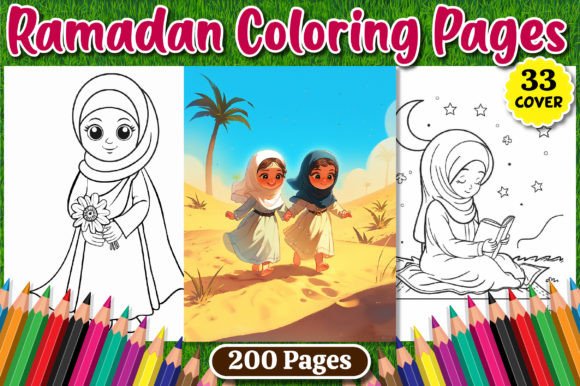
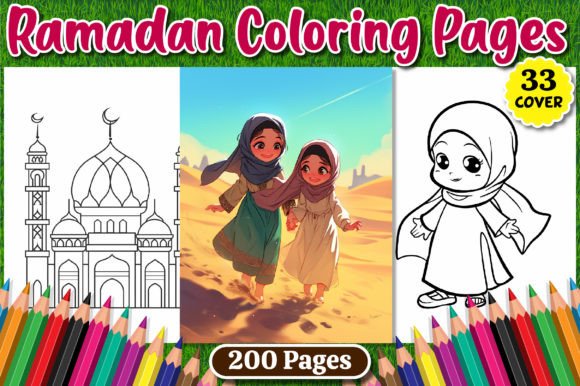
Ramadan Coloring Pages for Kids, Vol.01 is a 200-page interior package designed specifically for creators, educators, and caregivers who want to support children’s engagement with Ramadan through art and reflection. It includes 200 unique illustrations—each rendered in crisp 300 DPI resolution—available as JPG, PNG, and PDF files, all sized to standard 8.5″ x 11″ print dimensions. That means no resizing headaches, no blurry edges when printed, and no guesswork about compatibility with common design tools or KDP upload requirements.
The four-folder organization isn’t just tidy—it reflects how people actually work: one folder for ready-to-print PDFs, one for transparent-background PNGs (ideal for overlays or digital learning slides), one for high-res JPGs (great for social media previews or email newsletters), and a dedicated folder with 33 bonus PNGs meant for book covers, thumbnails, or promotional graphics. That last detail matters more than it sounds: if you’re building a series or launching a themed product line, having cover-ready assets saves hours—and avoids the “I’ll just do it later” trap that stalls launches.
Where It Fits Into Real Life (Not Just Theory)
Think about the parent juggling Iftar prep while trying to keep two kids quietly occupied before Maghrib. A printed page from this collection—say, a lantern with crescent moon details or a child breaking fast with family—gives them 15 focused minutes. No screen time. No setup. Just crayons and calm.
Now picture the Sunday school teacher preparing for Taraweeh night with families. She pulls up three pages—one showing prayer postures, one illustrating dates and water, another with “Ramadan Mubarak” calligraphy—and prints them as handouts. The PNG versions let her drop them into a Canva slide deck for a quick visual story before the lesson begins.
Or consider the indie creator launching a low-content Ramadan journal on Amazon KDP. With the full 200-page interior already formatted, tested, and bleed-free, she uploads directly—no layout software needed. The included PDF meets KDP’s exact specs, and the extra cover PNGs mean she can test multiple thumbnail options without commissioning new artwork.
Who Benefits—and How Their Needs Differ
- Home educators and homeschooling parents use the pages as gentle, tactile extensions of daily Ramadan discussions—coloring a mosque helps reinforce vocabulary; shading a suhoor table sparks conversation about gratitude and intention.
- Islamic centers and masjid programs rely on the consistency across pages: no copyrighted clipart, no mismatched styles, no religious inaccuracies. Each illustration respects modesty norms and reflects diverse ethnic representation—something many free online printables overlook.
- Small business owners selling printable bundles or subscription boxes treat this as a foundational asset. They mix and match pages into themed sets (“Fasting Focus”, “Night of Power”, “Eid Prep”) or layer them into editable Canva templates for digital products.
- Therapists and counselors working with Muslim children find value in the emotional grounding these pages offer—coloring repetitive patterns (like geometric mosque borders) supports regulation, while scenes of shared meals or quiet reflection mirror therapeutic goals around belonging and routine.
Things to Keep in Mind Before You Use It
This collection shines brightest when you know what you’re *not* getting—and that’s okay. It’s not an illustrated storybook with narrative text. There are no activity instructions, teaching notes, or multilingual labels built in (though the clean line art makes adding those easy). It’s also not animated, interactive, or app-based—so if your goal is screen-based engagement for toddlers, this isn’t the tool.
You’ll want to consider printing logistics: while all files are 300 DPI and sized for standard paper, ink coverage varies by design. Pages with dense patterns (like intricate arabesque borders) may use more ink than simpler outlines—good to know if you’re printing bulk copies for a large class.
Also worth noting: because the artwork is original and rights-cleared for commercial reuse (including KDP), you’re free to adapt, combine, or rebrand—but you can’t resell the files *as-is* as a standalone digital download. That protects both the creator and buyers who invest in derivative work.
Why the Format Details Matter More Than You’d Think
That “4 separate folders” detail? It prevents workflow friction. When you’re editing a cover in Photoshop, you go straight to the PNG folder—not hunting through a single ZIP of mixed formats. When prepping for KDP, you open the PDF folder and drag-and-drop. No conversion. No trial-and-error with margins or compression.
The 300 DPI spec isn’t just marketing speak—it’s what keeps lines sharp when printed at full size, especially important for fine details like Arabic script flourishes or delicate star-and-crescent motifs. And having both JPG and PNG gives flexibility: use JPGs for fast email attachments or web previews; reserve PNGs when transparency or layered editing matters.
Even the “free 33 PNG coloring images for book cover” serves a practical purpose beyond aesthetics. These aren’t generic stock—they’re stylistically matched to the interior pages, so your cover doesn’t look like an afterthought. That cohesion builds trust with customers scrolling quickly through Amazon or Etsy listings.
A Resource That Grows With Your Intent
One teacher told us she started using Ramadan Coloring Pages for Kids, Vol.01 for her madrasah class—and ended up adapting six pages into laminated flashcards for vocabulary review. Another used the crescent-and-star outlines to create reusable stencils for Eid crafts. A third added gentle affirmations (“I am kind during Ramadan”) in editable text boxes over blank-background pages and turned them into morning reflection sheets.
That adaptability comes from intentional design—not just variety in subject matter, but clarity in line weight, consistent spacing, and intentional negative space. It’s built for doing, not just displaying.
So whether you’re printing one page tonight for your niece, uploading 200 pages tomorrow for KDP, or building a seasonal curriculum over the next few years—Ramadan Coloring Pages for Kids, Vol.01 meets you where you are, with what you need, without asking you to become a designer, developer, or theologian first.