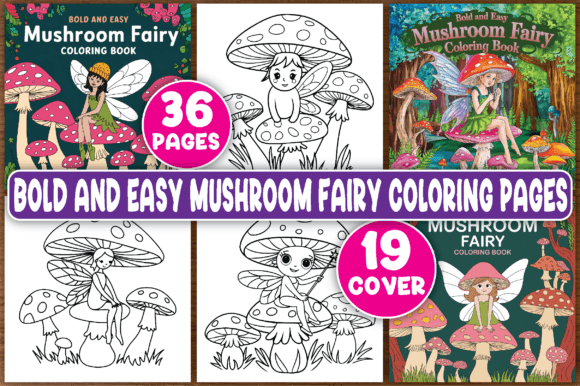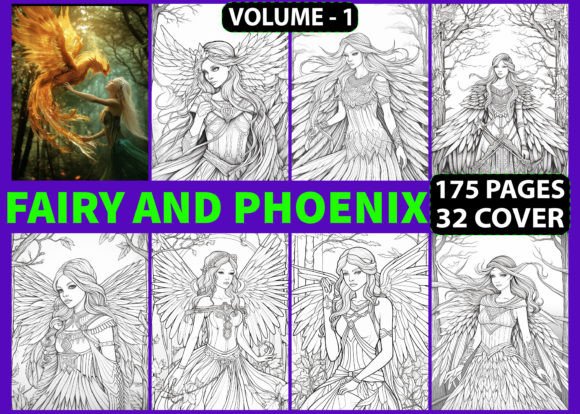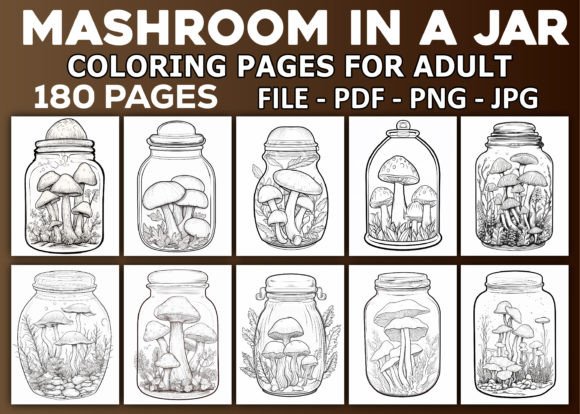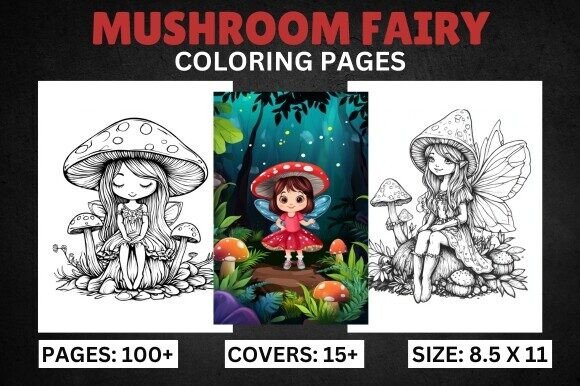
Mushroom Fairy Coloring Pages for Adults
There’s something quietly magical about mushroom fairy coloring pages for adults—not just in the whimsical blend of forest folklore and delicate botanical detail, but in how effectively they support focus, calm, and creative re-engagement. Unlike trend-driven or overly complex adult coloring books, these designs strike a thoughtful balance: intricate enough to satisfy seasoned colorists, yet intuitive enough for beginners stepping into mindful art for the first time. They’re not just “pretty pictures”—they’re functional tools for mental reset, low-pressure self-expression, and even small-business content creation.
What Many Overlook (and Why It Matters)
A common misconception is that any black-and-white fairy-themed line art qualifies as a strong interior for an Amazon KDP coloring book. In reality, technical execution makes or breaks usability—and customer satisfaction. For example, some creators assume “high resolution” means “just zoomed-in,” only to discover their 72 DPI files print with jagged edges, faint lines, or inconsistent stroke weights. That leads directly to poor reviews (“lines too thin,” “bleeds when colored,” “hard to see details”) and lower rankings—even if the artwork itself is charming.
Another frequent oversight? Ignoring layout consistency across all 100 pages. A truly professional interior doesn’t just look good one page at a time—it flows. That means uniform margins (especially critical for bleed-aware printing), centered compositions, consistent line thickness, and intentional negative space around each design. Without this, readers struggle with page-turning fatigue, uneven coloring experiences, or accidental cropping during binding.
Why File Format & Structure Are Non-Negotiable
You’ll receive a .zip file containing 100 PNG coloring pages—each sized precisely to 8.5” x 11” at 300 DPI. That’s not arbitrary. PNG preserves crisp vector-like edges without compression artifacts, unlike JPEGs that blur fine linework. And 300 DPI ensures clean prints on standard home printers *and* commercial KDP presses. But here’s what many miss: even with perfect specs, misaligned canvas boundaries or stray pixels outside the printable area can trigger KDP warnings—or worse, unintended cropping in the final book.
Before uploading your interior, always open a few random PNGs in a free tool like GIMP or Paint.NET and verify: Is the design fully contained within the 8.5” x 11” frame? Are there no hidden layers or transparency glitches? Does every line render solid black against pure white? If you spot faint gray shadows, anti-aliased fuzziness, or off-center placement, those aren’t “minor quirks”—they’re usability red flags your buyers will notice immediately.
The Cover Trap (and How to Avoid It)
Yes, you get 15 professionally designed cover options—but don’t treat them as interchangeable templates. Your cover must signal *who this book is for*. A cover heavy on glittery fonts and cartoon mushrooms may attract kids’ activity book shoppers—not the adult mindfulness audience. Conversely, an overly minimalist, monochrome cover might under-communicate the enchanting, nature-inspired warmth that makes mushroom fairy themes resonate.
Look closely at the 15 covers: Do any pair soft watercolor textures with subtle fungal motifs? Do any use earthy tones alongside clear, readable typography? Those are your strongest candidates for adult audiences. Test them by asking: “Would someone browsing ‘stress relief coloring books’ pause here?” If the answer isn’t an unhesitant yes, keep scrolling through your included options—don’t force-fit a mismatched cover.
Real-World Use Cases Beyond Printing
These mushroom fairy coloring pages for adults aren’t limited to static books. Educators use individual pages as tactile grounding tools before classroom discussions. Therapists integrate them into session handouts for anxiety management. Freelancers repurpose select designs as branded journal inserts or digital newsletter bonuses—adding value without reinventing the wheel. And entrepreneurs building low-content businesses often layer these pages into themed bundles (e.g., “Forest Mindfulness Kit” with guided prompts + printable tracker + coloring page) to increase perceived value and average order size.
But caution: Don’t assume all 100 pages work equally well for every use case. Some feature tighter linework ideal for fine-tip pens; others have bolder outlines better suited for markers or colored pencils. Skim through the full set and group them mentally: “Delicate detail,” “Bold & beginner-friendly,” “Nature-dense,” “Minimalist fairy focus.” That simple categorization helps you curate instead of defaulting to alphabetical order—or worse, random selection.
What to Verify Before Hitting “Publish” on KDP
- Preview every page in KDP’s online previewer—not just the first ten. Zoom in on corners and fine stems. Does line clarity hold? Do any pages appear washed out or overly dense?
- Check your interior PDF export settings. When converting PNGs to PDF (using Adobe Acrobat, Canva, or similar), choose “Press Quality” or “High Quality Print,” not “Standard” or “Smallest File Size.” Compression here can reintroduce blurriness—even from perfect source files.
- Test print at least three varied pages on your own printer using the exact paper weight you plan to offer (e.g., 60–70 lb matte). Does the ink bleed? Do thin lines disappear? Adjust brightness/contrast in your PDF editor *before* final upload if needed—KDP won’t auto-correct contrast loss.
- Read your own title and subtitle aloud. Does “Mushroom Fairy Coloring Pages for Adults” clearly reflect what’s inside? Avoid stacking too many variants (“for women, men, teens, therapists…”). Clarity beats keyword stuffing—and Amazon’s algorithm rewards relevance over repetition.
Ultimately, mushroom fairy coloring pages for adults succeed not because they’re “trendy,” but because they meet real needs: accessible creativity, gentle escapism, and tangible craftsmanship. The right files—tested, structured, and thoughtfully presented—don’t just fill a book. They build trust, encourage return purchases, and quietly position you as someone who understands both artistry *and* audience.
So take the time. Open that .zip. Scroll slowly. Print one. Color it—not to finish, but to feel how the lines guide your hand, how the shapes invite breath, and how the quiet magic of mushrooms and fairies translates, page after page, into something deeply human.