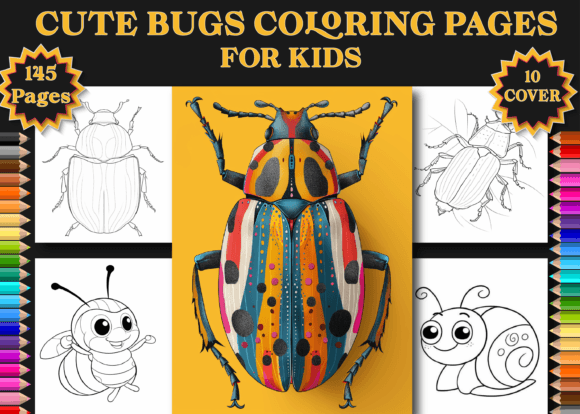
145 Cute Bugs Coloring Pages for Kids
Imagine opening a resource that does more than entertain—it invites curiosity, supports early learning, and fits seamlessly into multiple creative workflows. 145 Cute Bugs Coloring Pages for Kids is exactly that: a thoughtfully assembled, print-ready digital bundle designed for real-world use—not just passive consumption. With 145 high-resolution black-and-white illustrations of friendly, approachable insects—from ladybugs and fireflies to dragonflies and bumblebees—this collection balances charm with clarity, making it equally valuable for educators, indie publishers, homeschoolers, and designers building kid-focused products.
A Resource Built for Flexibility, Not Just Coloring
This isn’t a static PDF meant only for crayons and couch time. Each of the 145 pages is delivered in three formats—PDF (A4 and 8.5×11″), JPG, and PNG—at 300 DPI, ensuring crisp output whether printed on home inkjets or scaled for professional KDP uploads. That technical readiness opens doors: you can extract individual bugs to build themed flashcards, layer them into interactive digital storybooks, or adapt outlines for embroidery patterns and vinyl cut files. The clean line art avoids excessive detail, keeping it accessible for ages 3–10 while still offering enough structure for older kids to practice shading, pattern design, or even basic entomology labeling.
Creative Applications Beyond the Page
For educators and homeschoolers, these pages serve as springboards—not supplements. Pair a page of a honeybee with a short discussion about pollination, then ask students to draw their own “bug helper” for a garden. Use the ant colony illustration to introduce concepts like cooperation or life cycles. Because each image stands alone, you can sequence them intentionally: start with soil-dwellers (earthworms, beetles), move to flying insects, then end with nocturnal species—creating a gentle, visual narrative arc across lessons.
Indie publishers and KDP creators will appreciate the included 10 premium book cover images. These aren’t generic clipart—they’re cohesive, on-brand designs that match the interior’s friendly tone and consistent linework. You can launch multiple titles from one bundle: *Cute Bugs ABC*, *My First Bug Journal*, or *Rainforest Bugs vs. Garden Bugs*—each using curated subsets of the 145 pages. To keep branding tight, use the same cover font family across titles and limit color palettes to two or three accent hues when designing interiors or marketing assets.
Designers and makers can repurpose elements strategically. Isolate wings from the butterfly or dragonfly pages to create seamless patterns for fabric or wrapping paper. Convert select bugs into SVG files for Cricut or Silhouette projects—think bug-shaped magnets, classroom name tags, or sensory bins with laminated, tactile cutouts. Because all images are vector-friendly line art (not raster-heavy), scaling stays clean, even at 200% size for wall decals or bulletin board displays.
What Makes These Pages Stand Out—Practically
It’s not just the quantity—it’s the consistency. Every illustration maintains the same line weight, spacing, and expressive simplicity. No sudden shifts in style between pages mean less cognitive load for young colorists and smoother production for creators bundling pages into themed workbooks. There’s no background clutter; negative space is intentional, giving kids room to add their own grass, clouds, or bug homes—supporting storytelling and fine motor development.
The inclusion of both JPG and PNG files matters too. PNGs preserve transparency, letting you drop bugs directly onto custom backgrounds (e.g., a jungle scene or starry night sky) without white borders. JPGs offer smaller file sizes for faster email delivery to clients or parents. And because everything lives in one organized folder structure—with clearly numbered files—you avoid the time-sink of renaming or sorting before use.
Realistic Tips for Getting Started
- Start small: Pull 12–15 pages that share a trait (e.g., “bugs with stripes” or “six-legged friends”) and turn them into a mini-zine for a local library event or summer camp handout.
- Test readability: Print one page at actual size and ask a child aged 5–7 to color it. Note where they hesitate—is a leg too thin? Is antennae placement confusing? Use those insights to guide future adaptations or derivative works.
- Repurpose with purpose: Don’t just recolor—recontextualize. Turn the caterpillar page into a growth tracker (“Draw yourself growing this month”), or use the spider web outline as a template for counting exercises (how many lines? how many sections?).
- Keep it original: While the base artwork is ready-to-use, add your voice. Hand-letter a fun fact on each page (“Did you know? A ladybug can eat up to 50 aphids a day!”), or include a simple reflection prompt (“What sound do you think this bug makes?”).
Who Benefits—and How
Small business owners running craft studios or educational subscription boxes can include printable bug pages as bonus content—adding value without inventory cost. Bloggers and content creators can feature themed coloring challenges (“Bug Week!”), embedding downloadable links and tracking engagement through opt-in forms. Therapists and occupational specialists use structured line art like this to support focus, bilateral coordination, and emotional regulation—especially when paired with calming prompts or breathing cues.
Even if you’re not creating for kids directly, the collection offers unexpected utility. Use simplified insect silhouettes in presentation decks to illustrate concepts like systems thinking, adaptation, or biodiversity. Or pull clean outlines into UX wireframes to represent user journey “touchpoints”—a playful but memorable visual metaphor.
Final Thought: Tools Enable, But People Direct
145 Cute Bugs Coloring Pages for Kids succeeds because it respects both the child’s need for joyful discovery and the creator’s need for reliable, adaptable assets. It doesn’t try to be everything—but it does one thing exceptionally well: provide a strong, versatile foundation. Whether you’re launching your first KDP workbook, designing a nature unit for second grade, or prototyping an eco-themed app for preschoolers, this bundle saves hours of illustration time while leaving plenty of room for your insight, voice, and vision. The bugs are cute—but the real value is in what you build next.